Trading fees open card packs. Holders get the cards.
Every trade of $GACHA pays a small fee. The fees go into one public wallet that opens real graded card packs all day. Hold the coin and the cards come to you.
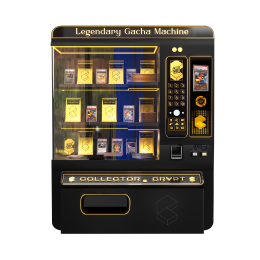
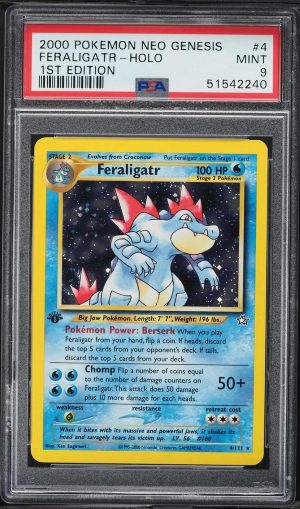
The loop
- 1
People trade $GACHA
Every trade pays a small creator fee. All of it goes to one wallet that anyone can look up.
- 2
The wallet opens packs
A small pack opens every time the line's share of fees reaches the pack price. No clock, no waiting: more trading, more cards. Plus one big pack every 6 hours. Each pack holds one real graded card.
- 3
Cards go to holders
The card is sent straight to a holder's wallet. Keep it, sell it, or redeem the real slab.
Where each dollar of fees goes
Day one
Days two and three
After launch week
From week three, 20% of each fee goes to the team first; the rest splits as above.
The line
Fees fill a bar. When it reaches the next pack's price, the pack opens and the card goes to the holder at the front of the line. Then the bar starts again.
Launch week (first 72 hours): Starter packs only. On day one every fee goes to the line: fees hit $25, a pack opens live on stream, the #1 holder gets the card, one card for every $2,500 traded. Days two and three the line gets 70%. After 72 hours it gets 60% and packs rotate through all five games.
your place = hours held × bag boost
Bag boost: 1M tokens = 1× · 10M tokens = 1.25× · 20M tokens or more = 1.5× (the most)
- The longer you hold, the closer you get to the front.
- Bigger bags move faster. Up to 50% faster, never more.
- Same score? The bigger bag goes first.
- Win a card and you go to the back. Everyone gets a turn.
- Sell or send any tokens and you go to the back.
- Packs rotate through five card games: Pokémon $25, One Piece $50, Dragon Ball $50, Anime $75, Riftbound $100.
You need at least 1M $GACHA to be in the line. That is 0.1% of supply, so it costs about $50 at a $50k market cap, $100 at $100k, $1,000 at $1M. Buy a little extra to cover the trading fee.
- 131 hours × 1× (1M tokens)gets the next card31
- 219 hours × 1.5× (25M tokens)28.5
- 322 hours × 1.25× (12M tokens)27.5
- 426 hours × 1× (2M tokens)26
- 37youpaste your wallet address on the site to see your place4
The boss rip
Every 6 hours the wallet buys the biggest pack the pot can afford. There is no target to wait for. More trading means a bigger pack.
Launch week (first 72 hours): no boss rips on day one; every dollar goes to fast line drops. From day two the pot gets 30% of fees and the first boss rip comes 6 hours later. After launch week the pot gets 40% and the big packs start showing up.
- Starter$25
- Elite$50
- Bronze$100
- Legendary$250
- Hyper$500
- Grail$1,000
- Mythic$2,500
- Celestial$5,000
Next boss rip: Hyper, $500
Hit
The card is worth more than the pack. It goes to a holder in a random draw. The longer you have held, the better your odds.
Miss
The card is worth less than the pack. The wallet sells it straight back, and that money stays in the pot for the next rip.
To be in a boss draw you must have held since the last boss rip. For packs of $1,000 and up, at least 24 hours.
Why hold
You move up every hour
Your place in the line is mostly about hours held. Do nothing and you still get closer.
Selling sends you to the back
Sell or send any tokens and your clock starts again. Buying more never hurts you.
Long holders win the big ones
Boss draws use the same score. More hours held means more tickets.
Big bags get an edge
A big bag moves up to 50% faster. That is the whole whale bonus. Time still decides most of the line.
Check it yourself
One wallet does everything. Look it up any time and follow the money from fee to card.
Fees arrive
Trading fees land in the wallet.
Pack bought
USDC leaves for the pack price. $250 out is a Legendary.
Card received
The card shows up as an NFT with its name, grade and cert number.
Card sent
It goes to the holder's wallet. Every drop links to its transaction.
For every boss draw we post the holder list and the Solana block we used, so you can run the draw yourself.
Plain facts
- Packs are random. Most pulls are worth less than the pack.
- The line moves as fast as people trade. Quiet day, slow line.
- Holding gets you cards. It does not protect the price.
- Team wallets are not in the line or in any draw.
- Team cut: none for the first two weeks after launch. After that, 20% of fees go to the team and 80% keep opening packs.
Do I need to do anything to get a card?
No. Hold at least 1M $GACHA in your own wallet. Cards are sent to that wallet.
How much is 1M $GACHA?
Always 0.1% of the market cap, because there are 1 billion tokens. About $50 at $50k, $100 at $100k, $1,000 at $1M. Spend a few percent more so the 1% trading fee doesn't leave you just short.
How fast do cards drop?
As fast as people trade. Every trade pays a 1% fee, and the line opens a pack each time its share reaches the pack price. On day one that is a $25 card for every $2,500 traded, opened live on stream; days two and three about every $3,600; after launch week one pack for every $4,000 to $17,000 traded depending on the pack. The boss rip is on a clock, every 6 hours from day two, whatever the volume.
What can I do with a card I win?
It is yours. Keep it, sell it, or redeem the real graded slab.
What counts as selling?
Any sell or transfer out of your wallet. Your score goes back to zero and starts counting again.
How is a boss winner picked?
A random draw. Your tickets are your score: hours held times bag boost. The holder list and the block used are posted every time.
Does the team take a cut?
Not for the first two weeks after launch: 100% of fees open packs. From week three, 20% of each fee goes to the team and the other 80% keeps opening packs. The watcher applies the split and the numbers on the site show it.
Where does the first money come from?
The team puts SEED AMOUNT into the boss pot at launch so the first rips happen on day one. After that it is all trading fees.